


Business Signature СПЕЦИАЛНО ИЗДАНИЕ /// Жената е 2026
Architecture to Stay
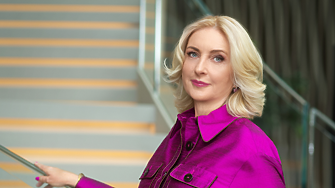
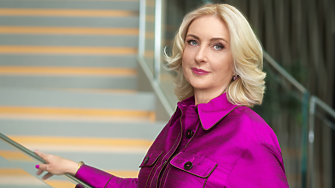
Vessela Mirianova is Architect CEO and driving force behind ARTEKS ENGINEERING
Architecture to Stay

Vessela Mirianova is Architect CEO and driving force behind ARTEKS ENGINEERING


She is an established professional in architecture and construction. Under her leadership, ARTEKS ENGINEERING has delivered landmark projects that combine aesthetics, functionality and innovative technologies, transforming the urban environment. To her, architecture is not simply a profession but an art that shapes the future. Her working principles are uncompromising quality, innovation and long-term vision. She graduated from the University of Architecture, Civil Engineering and Geodesy (UACEG), where she developed in-depth expertise and a keen eye for innovative architectural design.
ARTEKS ENGINEERING AD is one of Bulgaria's leading construction companies.
What change would you like to see in contemporary architecture?
Buildings should think about the city rather than become enslaved to cars, hemmed in by parking spaces. They should give their first three metres of height back to their neighbourhoods. The ground floor and the space in front of it should be devoted to the city’s so-called “third places”—places where people can meet without having to spend unnecessarily: children’s centres, creative clubs, cafés, small gardens, benches…
Buildings should make better use of the city and its existing infrastructure instead of pushing up towards Vitosha Mountain. At the same time, they should increase vegetation through well-maintained green spaces, including vertical greenery. They should embrace timber, clay, wool, hemp and other materials as genuine construction materials, improving the sustainability, energy efficiency and, above all, the healthiness of homes—not simply using them as decorative elements in an “eco-style” interior.
Contemporary architecture and construction should help make cities increasingly pedestrian-friendly and rich in human interaction.
Which factors influencing property choices have changed over the past five years?
“Beautiful because it is new” is no longer enough. People are looking for homes in buildings that will still look three years old after thirty years. I know this because I work in one. Our head office on Neofit Rilski Street is in the first building we constructed thirty-three years ago.
People are no longer looking simply for square metres, but for greenery, light, excellent connections to the city, shops and services within the building itself, a healthy environment created by the materials used and high-quality construction. They also value adaptability and future potential: a home that can serve as a residence, an office, a gym and a space for children to play.
Has there been a moment when, as a leader and architect, you have had to step back from one of your own ideas?
ARTEKS is in the business of architecture and construction—in other words, creation. And creation is bigger than the ego.
To see your idea spark the imagination and critical thinking of the talented people around you; to feel the temperature rise as ideas are passionately exchanged; to recognise that a better solution has emerged… How could embracing that solution be considered backing down? Quite the opposite. It shows that you are surrounded by the right people—both within your team and among your business partners.
At moments like these, I say to myself, “How well we have chosen our people!” Even more often, I say it out loud. It is a happy thought!
What else would you like to create that does not fit entirely within the boundaries of your professional role?
Perhaps it is less about creating something and more about learning… I am fascinated by the parallels between a building and a garment as forms of home.
In architecture, the most important question is how a person will feel in a particular space. How will it influence their mood, self-confidence and ambitions? The same questions apply to clothing. Dior, for example, transformed the very silhouette of women through clothing that accentuated femininity. Japanese designers such as Issey Miyake and Yohji Yamamoto, meanwhile, place the human body within architectural volumes of fabric, almost turning the wearer into a piece of urban art. A building can inspire a garment, but a garment can also inspire an architectural solution.
Professionalism knows no boundaries, because no single field knows everything about people and the world. That is why, at ARTEKS, we always strive to learn more.





|
Тестване на границите
Специални издания | Обновена 10:46ч., 24.11.2026
Какво, ако…?
Специални издания |
Обновена 10:46ч., 24.11.2026
Getting Off the Tiger’s Back
Business Signature | Специални издания |
Обновена 10:46ч., 24.11.2026
Да слезеш от гърба на тигъра
Business Signature | Специални издания |
Обновена 10:45ч., 24.11.2026
Trust Knows No Borders
Business Signature | Специални издания |
Обновена 10:45ч., 24.11.2026





















Ключови думи
ARTEKS ENGINEERING
architecture
construction
urban environment
sustainability
natural materials
third places
pedestrian-friendly city
property choice
quality