


Business Signature БРОЙ /// Жената е 2026
The Courage to Explore the Unknown
In a conversation about the future we can create in the economy, innovation and our understanding of human potential, Desislava Lyubenova, DSc, Chair of the Board of Directors of Trace Group Hold AD
The Courage to Explore the Unknown
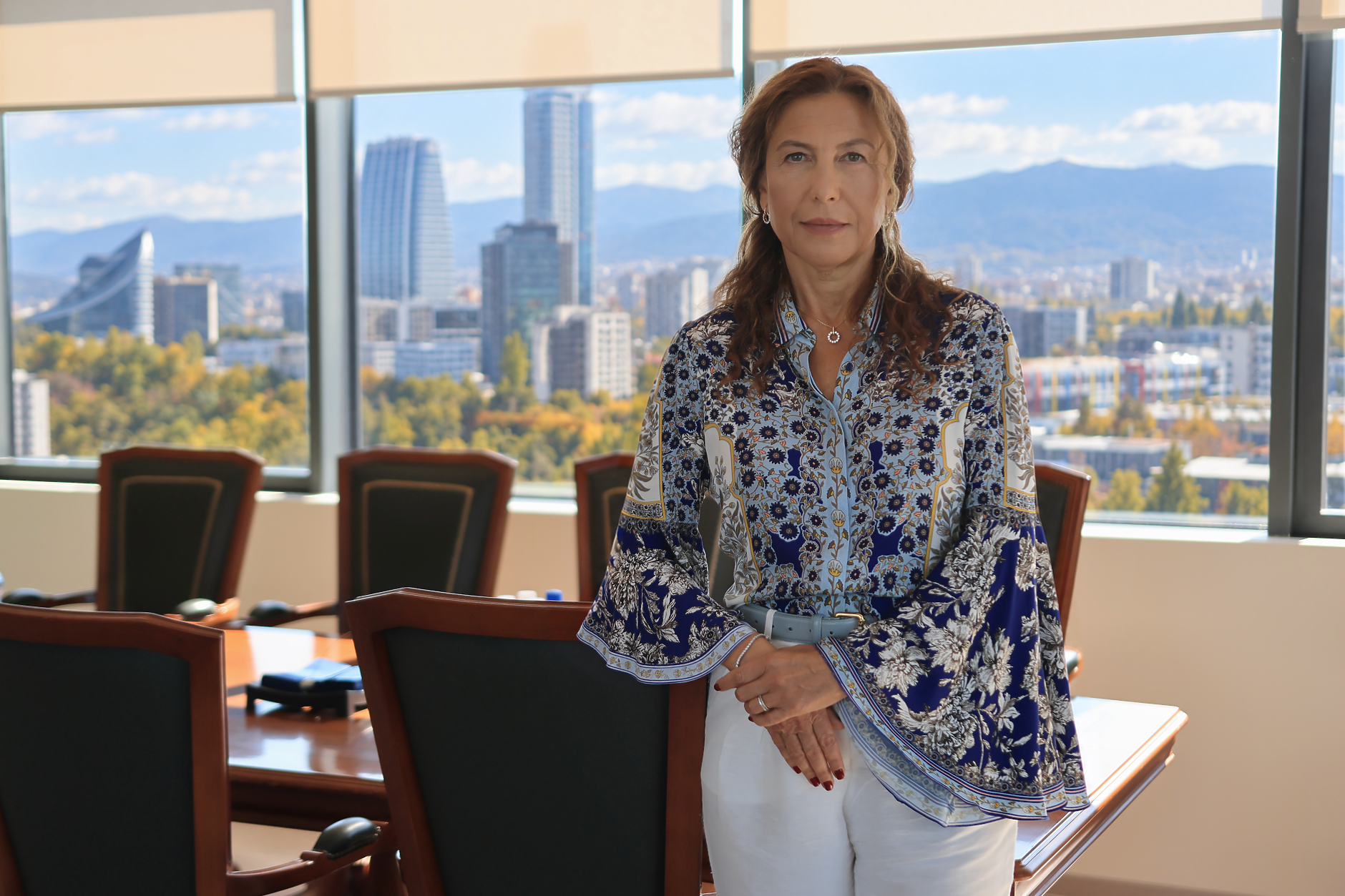
In a conversation about the future we can create in the economy, innovation and our understanding of human potential, Desislava Lyubenova, DSc, Chair of the Board of Directors of Trace Group Hold AD


Desislava Lyubenova, DSc, is Chair of the Board of Directors of Trace Group Hold AD. She is also Executive Director of the Trace for People Foundation, manages an investment company in Athens, Greece, and founded BioRestart, an innovative medicine clinic focused on prevention, treatment and regeneration at cellular level. She holds master’s degrees in Economics and Human Resources Management and in Theory and Methodology of Mass Communication from the University of National and World Economy, as well as in Public Health and Health Management from Medical University. She holds a doctorate in social medicine and the organisation of healthcare and pharmacy. Her professional training includes programmes in London with KPMG, Ernst & Young and D. G. Jones & Partners, and specialisation in capital markets and management in the United States.Trace
Group Hold AD is one of Bulgaria’s leading construction and infrastructure companies, specialising in the design, construction, reconstruction and maintenance of major infrastructure assets. It has delivered significant projects in Bulgaria and abroad, including Serbia and Romania, and has participated in the construction of the Trakia and Hemus motorways as well as railway modernisation projects.
You have observed Bulgaria’s business environment since the early 1990s. How would you assess its development, and what changes are you still waiting to see?
Bulgaria’s business environment has undergone a revolutionary journey, from a great deal of enthusiasm and little experience with market-based business models to the creation of sustainable, competitive ones. Over the years, Bulgarian entrepreneurs have demonstrated flexibility, adaptability in crises and openness to innovation and investment in people. Today our economy has sectors with clear European and global potential, but challenges such as administrative burdens, a lack of predictability and an acute shortage of skilled personnel are slowing growth. In the coming years, I expect our country’s geostrategic location to be transformed from potential into a genuine economic advantage through large-scale investment in connectivity and logistics. I also hope to see the long-sought connection between education and business finally become a reality, alongside policies that encourage the circular economy and domestic production.
How can Bulgaria’s strategic geographical position become a real economic advantage today? What are we still missing?
Geography has long ceased to be sufficient in itself and, unfortunately, making use of it is a matter of government policy. A long-term vision, a systematic approach, foreign policy and domestic capacity are among the factors needed to turn our objective advantages into reality. Throughout the democratic period, tentative commitments in this direction have been made from time to time, but unfortunately they have not been followed by serious, consistent action. It is as though we lack confidence, commitment and the ability to think on a larger scale. The imposed notion that we are a small country provides a convenient excuse. In fact, Bulgaria ranks 16th in Europe by area, with another 28 countries smaller than ours, and 20th by population. Being “a small country” is a convenient framework behind which we have hidden for far too long.
Which sectors in Southeastern Europe have the greatest potential to attract capital in the coming years?
In the context of the previous question, we need substantial improvements to our transport, energy and digital infrastructure, as well as better connections with other Southeastern European countries. Bulgaria has the potential to establish itself as a key regional logistics and distribution hub, especially as global supply chains are being reconsidered and nearshoring gains momentum. But that requires the rapid completion of missing critical infrastructure: modern motorways, high-speed rail connections, intermodal terminals and efficient land borders.
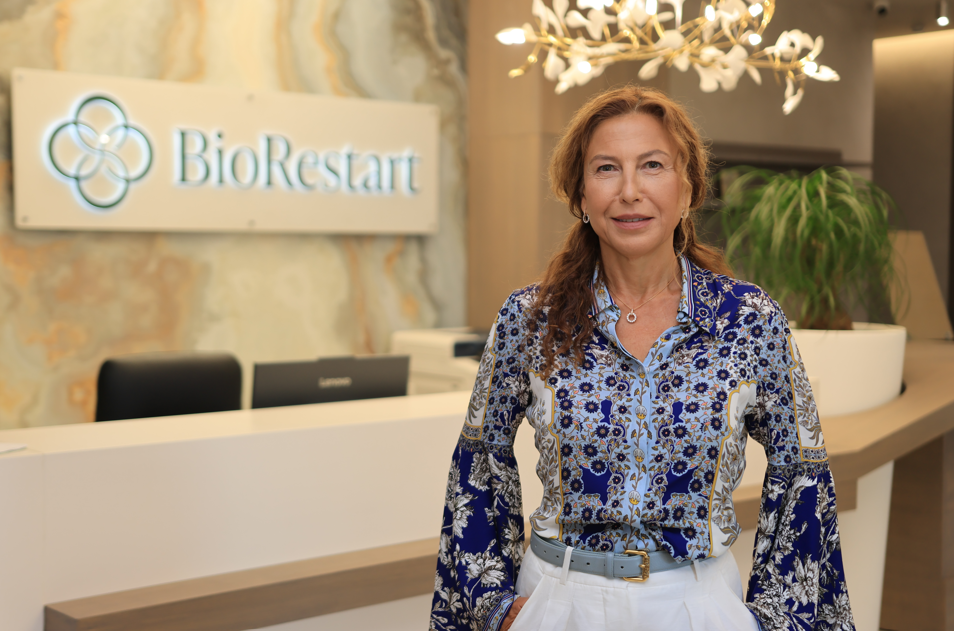
You have embarked on another journey, this time in healthcare. What motivated you to take on another role?
When I was about to begin university, my parents asked what I intended to study. I told them I did not yet know, but I knew what I would not study: medicine or engineering. The paradox is that I have been involved in both for many years, by choice and still with great inspiration. The lesson for me is that we should not confine ourselves within our own boundaries; we should listen to our hearts and not be afraid to follow them. On the one hand, medicine is a hobby for me. On the other, it is extremely important that what I do should benefit other people. Years ago, I established a small specialist hospital and managed it for 13 years. I created it because it offered an opportunity to introduce something new and innovative in Bulgaria. Over time, however, I increasingly felt that my interest in medicine was more closely connected to prevention and the possibility of staying healthy, or undergoing treatment, in ways as close as possible to the laws of nature. That is how BioRestart was born.
What is BioRestart?
What I am about to say will probably surprise no one. I wanted to turn my beliefs and knowledge into a welcoming environment that genuinely supports health. I started with myself: what kind of healthcare service would I want to have in Bulgaria, and why should I have to seek it elsewhere in Europe rather than find it here? The process took more than two years. The technologies used at BioRestart are based on the fact that the human body has an extraordinarily complex, built-in system of adaptation and self-recovery, something we too often take for granted in daily life. Our energy levels, vitality, concentration and overall capacity are direct results of the delicate biochemical and biophysical balance within us. Meanwhile, modern lifestyles — chronic stress, environmental pollution, poor-quality food, water and air — subject our bodies to premature wear and biological strain. Our overall health and youthfulness depend on the health of our cells. Most of the procedures are specifically intended to stimulate cellular energy, activate natural detoxification processes and help restore balance to the nervous system. A fundamental principle in healthcare is the understanding that, for the body to regenerate and heal effectively, our nervous system needs to move out of a continuous state of stress and survival — the “fight or flight” response — in which cortisol levels are high and energy is diverted away from restorative processes. Through deep relaxation and biological recharging, the body releases the resources it needs to return to its natural state of health, vitality and longevity. A person is their own most long-term investment, in every sense imaginable.
Where do you think the next major breakthrough in medical innovation will come?
I sincerely hope we will see the right combination of increasingly advanced technologies and the subtle, still unexplained functions of our bodies that are now being studied more extensively, particularly those related to thought and consciousness. After all, it has already been demonstrated that we are more than “pure mathematics”. I am certain that sensors enabling ultra-early detection of diseases will soon become part of our lives, as will the discovery of new medicines and the development of personalised therapies through individual modelling and simulation of processes within the body. All of these are connected, to a greater or lesser extent, with research into magnetic and electrical fields in our cells. Some of the technologies at BioRestart are based on these principles too.
What is the costliest management decision you have ever made?
Perhaps the decisions I failed to make in time, even though I could see the warning signs.
How dangerous is it for a leader to say, “I already know this”?
It is a trap that a good leader must not fall into. On the other hand, without routine in business, there can be no further development or scale. You must always be sensitive enough to recognise when and how far you can rely on accumulated knowledge and experience — and when you need to venture into something new.
What unknown territory interests you most at the moment?
In the broadest philosophical sense, rethinking the very nature of reality and humanity’s place within it. At the intersection of technology and knowledge at the quantum level, many fundamental questions are coming to the fore. Consider, for example, the limits of what it means to be human. As technology begins to dismantle the barriers between the biological, the quantum and the artificial, we are confronted with the question of what being “human” actually means. Is consciousness simply a complex biochemical mechanism, or is it a fundamental property of matter itself, reaching a new level of self- knowledge and evolution through technology?




|
След ерата на лесния растеж
Специални издания | Обновена 12:59ч., 06.11.2026
Между любопитството и истинската трансформация
Специални издания |
Обновена 12:59ч., 06.11.2026
Евтино и лесно
Специални издания |
Обновена 12:59ч., 06.11.2026
Technovators League
Специални издания |
Обновена 12:58ч., 06.11.2026
Tech Deal Company & Future Shaper
Специални издания |
Обновена 12:58ч., 06.11.2026



















Ключови думи
Desislava Lyubenova
Trace Group Hold
business environment
infrastructure
connectivity
logistics
BioRestart
preventive medicine
cellular regeneration
innovation