


Business Signature БРОЙ /// Жената е
Leadership Beyond the Job Title
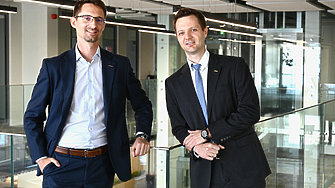
Milena Sharkova, CEO of FM Solutions
Leadership Beyond the Job Title

Milena Sharkova, CEO of FM Solutions


She is a woman who refuses to be defined by a single role: entrepreneur, leader, partner and a person driven by a cause. After 15 years in senior positions at major Bulgarian and international companies, she now brings her experience and courage to a business she runs with her life partner. For more than a decade she has also been the heart and driving force of the Emil Sharkov Foundation, making support for the families and children of fallen Ministry of Interior officers her personal mission.
FM Solutions is one of Bulgaria's leading facility management companies.
Over the years, you have held many professional roles. Which has had the greatest influence on how you make decisions and lead teams?
It is difficult to single out just one. Corporate life taught me discipline, strategic thinking and high standards. Working with different teams and business cultures showed me how important it is not only to make decisions but to inspire people to believe in them. Over time I realised that a good leader is not someone who has the answer to every question, but someone who creates an environment in which people grow, take responsibility and achieve more than they believed possible. Today I believe in leading by example, trust and consistency. I make decisions boldly, sometimes intuitively, but always knowing that people stand behind every business result. For me, success has real value only when shared. Going beyond limits does not mean being able to do everything; it means having the courage to be yourself in every role.
How does leadership change when you build your own business?
When you develop your own business, decisions carry a very different weight. Behind them are not only financial results and business targets but also people, families, trust and the reputation you build every day. Beyond performance and profit, your focus is on the well-being of your workforce, especially when you have nearly 700 employees. You take on the challenge and responsibility of providing the people who drive your business with a secure, stable income, motivating them, offering working conditions in which they can realise their full potential, and recognising and developing their strengths.
What are the biggest growth opportunities and challenges for facility management companies over the next few years?
I believe facility management is on the threshold of a major transformation. The greatest opportunity lies in changing how businesses view our industry—from a provider of support services to a strategic partner in managing buildings, infrastructure and the working environment. More companies now recognise that professional property management is not simply an expense but an investment in efficiency, sustainability and a better environment for people. Integrated services, digitalisation, smart management systems, energy efficiency and sustainable practices will be among the main growth drivers. I see enormous potential in preventive maintenance: anticipating problems instead of simply reacting to them. Technology and human expertise together can create genuine added value.

Yet the greatest challenge remains people. A shortage of skilled professionals, the need for continuous training and rising quality expectations demand a new approach to team management. At the same time, the sector still faces undervaluation of professional services and the practice of choosing providers primarily on the lowest price rather than the real value they deliver. At FM Solutions, we believe the future belongs to companies that successfully combine technology, professional expertise and care for people. However intelligent buildings become, the people behind them will always determine the quality of their management. The next stage will not simply be about serving more buildings, but managing them more intelligently, efficiently and responsibly.
What turns a cause into a personal mission?
A cause becomes a personal mission when it stops being merely something you believe in and becomes an inseparable part of who you are. Sometimes life confronts us with events we did not choose and could never prepare for. But we can choose what to do with the pain they leave behind: let it break us or find the strength to turn it into something meaningful. The Emil Sharkov Foundation represents that choice for me. Born from personal loss, over the years it has become far more than a cause: a responsibility, an expression of love, a community of children and families whose lives have become intertwined with mine. For more than a decade, we have shared not only difficulties but also joys, achievements and the children's growing up. At first I believed my mission was to give them support and hope. Today I know they give me just as much. They teach me strength, humility, gratitude and how important it is to stand by one another. The true meaning of a cause lies not in the scale of its achievements, but in the lives you touch and change. A personal mission begins when responsibility is no longer an obligation but an inner need—when you no longer ask why you do it because you cannot imagine not doing it.




|
След ерата на лесния растеж
Специални издания | Обновена 12:59ч., 06.11.2026
Между любопитството и истинската трансформация
Специални издания |
Обновена 12:59ч., 06.11.2026
Евтино и лесно
Специални издания |
Обновена 12:59ч., 06.11.2026
Technovators League
Специални издания |
Обновена 12:58ч., 06.11.2026
Tech Deal Company & Future Shaper
Специални издания |
Обновена 12:58ч., 06.11.2026


















Ключови думи
facility management
FM Solutions
entrepreneurship
leadership
Emil Sharkov Foundation
philanthropy
property management
digitalisation
sustainability
workforce development